

Introduction
SDD-UBIDS is committed to promoting gender equality, diversity, and social inclusion at all levels and structures. The university aims to create an inclusive educational environment where all members of its community, regardless of gender, ethnicity, or ability, feel safe, valued, and secure. SDD-UBIDS is therefore dedicated to fostering a learning, teaching, and social environment that upholds the inherent human rights and dignity of all women and men, regardless of their circumstances. SDD-UBIDS prioritises gender equality and social inclusion as core principles in the university’s governance to achieve its aims.
The Gender Centre is established to provide technical and practical support to strengthen the University’s capacity to identify and address issues related to gender equality, social inclusion, and workplace gender-based discrimination. This Centre was established to provide technical and practical support to strengthen the university’s capacity to identify and address issues related to gender equality, social inclusion, and workplace gender-based discrimination. This Centre thus plays a unique role since the University is situated in an inherently male-dominated northern Ghanaian context.
The Gender Centre strives to integrate gender equality, diversity, and social inclusion into all stakeholder interactions as a demonstration of the University’s commitment to these principles. The Centre is dedicated to creating a safe and peaceful working environment within the university community. It also works to prevent and advocate against any acts of discrimination, harassment, victimisation, intimidation, and violence, as they infringe upon individuals’ fundamental human rights. This endeavour is vital because such behaviours can undermine individuals’ rights and the university’s integrity. Additionally, the impacts of these actions on survivors and the university can be significant, as they may hinder knowledge generation and tarnish the university’s reputation as a world-class higher education institution. Thus, the Gender Centre plays a vital role in the university’s efforts to become a gender-friendly and inclusive institution with zero tolerance for all forms of discrimination. The Gender Centre strives to embed gender equality, diversity, and social inclusion into all stakeholder interactions as a demonstration of its commitment to these principles.
Objectives
Education: To function as a significant intellectual space where knowledge of fundamental concepts, theories, policies, practices, methodologies, and frameworks of feminist and gender discourse and praxis are explored through short-term courses, workshops, roundtable discussions, seminars, radio discussions, and other relevant fora.
Training: To promote a vibrant intellectual community in which academic researchers, development practitioners, policymakers, and the public are exposed to essential tools and frameworks for conducting and analysing gender-responsive approaches and social justice research.
Advocacy: To create a conducive space where socially disadvantaged and historically marginalised groups can seek support and find redress in ways (Rescue, Rehabilitate, and Reintegrate) that protect them from multiple victimisations.
Research: To foster and promote cutting-edge research on gender and social inclusion issues through mutually beneficial collaboration/partnership with other higher education institutions, NGOs, government departments, CSOs, the public, and other relevant stakeholders within and outside Ghana.
Publishing: To stimulate the production, exchange, and dissemination of empirically grounded and theoretically informed scholarship across different platforms, including publishing in top-tier journals, books, policy briefs, newspaper articles, mass and social media, radio discussions, etc.
Mandate
The Centre for Gender, Diversity, and Social Inclusion (Gender Centre) aims to promote gender integration in teaching, learning, and workplace practices. The Centre’s mandate is to serve as an important hub for capacity-building on gender integration, cutting-edge research and practical education. The Centre will offer advocacy, empowerment and practical education targeted at a range of academic and non-academic audiences. This Centre is an important avenue for top-notch scholarship, capacity-building training, advocacy and research in the core thematic areas of its clients, namely students and communities.
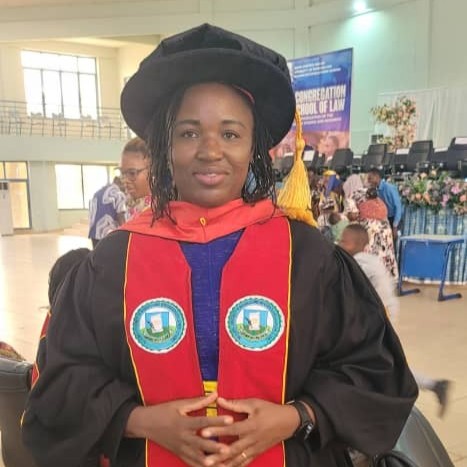 Prof. Awinpoka, Constance, Akurugu is a feminist scholar and activist. She obtained her Bachelor’s degree in Integrated Development Studies from the University for Development Studies in Ghana, her MPhil in Development Studies from the same university and a PhD in Sociology from Newcastle University in the United Kingdom.
Prof Akurugu is also a passionate feminist advocate with extensive experience working with international organisations and Civil Society Organisations (CSOs) in highly male-dominated and disadvantaged environments across northern Ghana, Ghana, and sub-Saharan Africa. Her work contributes to disrupting dominant and oppressive power structures, ending violence against women and girls, supporting marginalised groups, transforming harmful socio-cultural norms and practices that oppress women, and empowering them. She is involved in mentoring young women and men at the University. She is involved in mentoring women and girls from underprivileged backgrounds, collaborating with CSOs on preventing violence against women, and integrating gender considerations into various initiatives and programmes such as conflict prevention and measures against violent extremism. She is also dedicated to developing the capacities of both women and men traditional leaders, who act as gatekeepers of customary practices—some of which serve to oppress women and girls—to transform normalised violence, gendered inheritance customs, and decision-making processes within local communities.
Staff and Contact
The following staff provide administrative support for the smooth running of the CGDS, and where applicable, alternate staff exist to ensure continuous administration.
| s/n | Name | Contact |
| 1 | Prof. Awinpoka, Constance, Akurugu | cakurugu@ubids.edu.gh |
| 2 | Dr. Kristonyo Blemayi-Honya | kristonyohonya@gmail.com |