

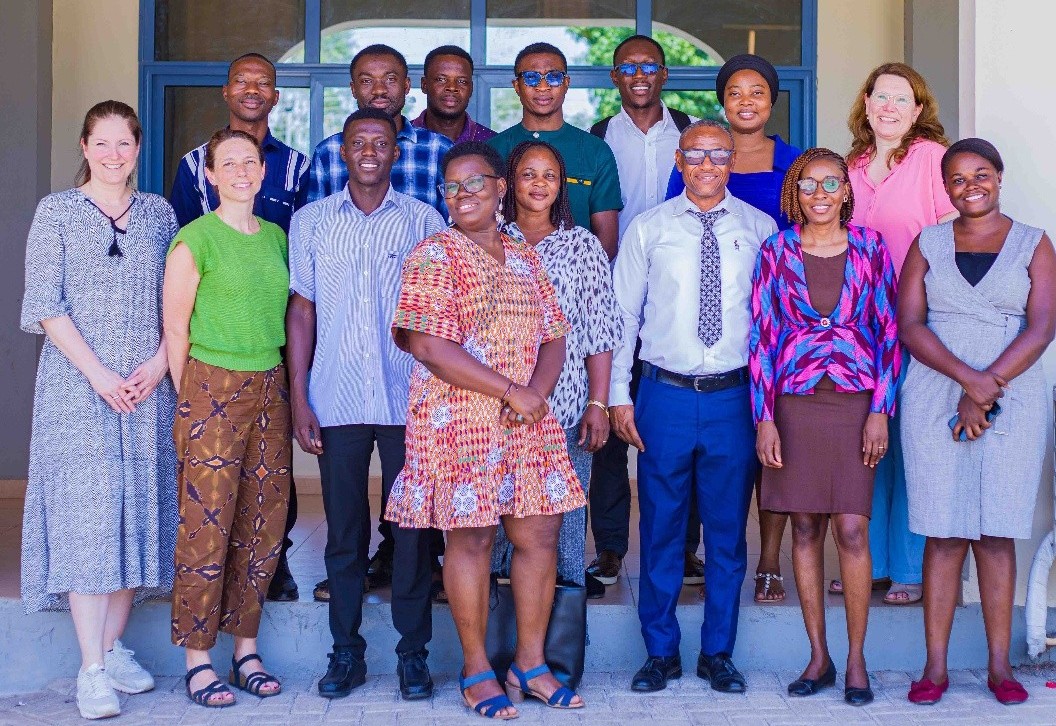
The University of Business and Integrated Development Studies (UBIDS), through its Directorate of International Collaborations, commenced activities on March 19, 2026, under the Erasmus+ K171 Learning Mobility Exchange programme in partnership with the University of Amsterdam (UvA). The orientation session brought together staff, students, and alumni of the Erasmus+ programme from the two universities to discuss the theme of the learning mobility exchange “Reimagining International Development Studies”.
Professor Bernard Afiik A. Akanbang, Dean of the School of Graduate Studies on behalf of UBIDS Management, welcomed participants and expressed optimism about the prospects for meaningful engagement and sustained collaboration between the two institutions. He encouraged participants to take full advantage of the platform by engaging in open dialogue, sharing perspectives, and maximising the academic and intercultural learning opportunities offered by the exchange programme.

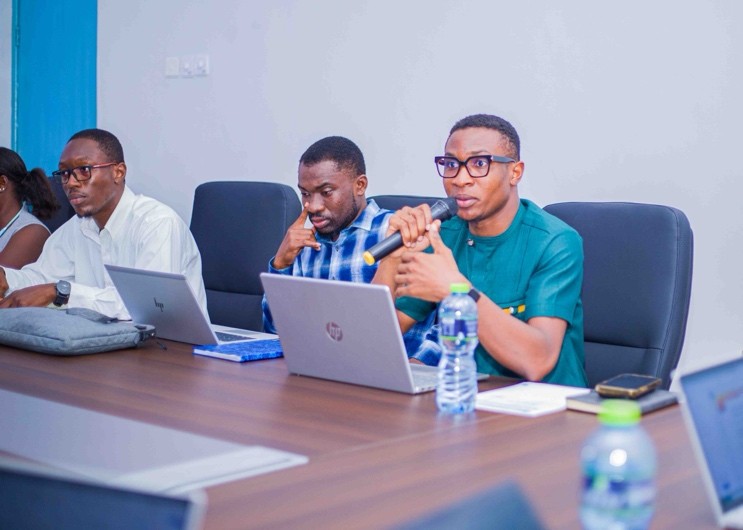
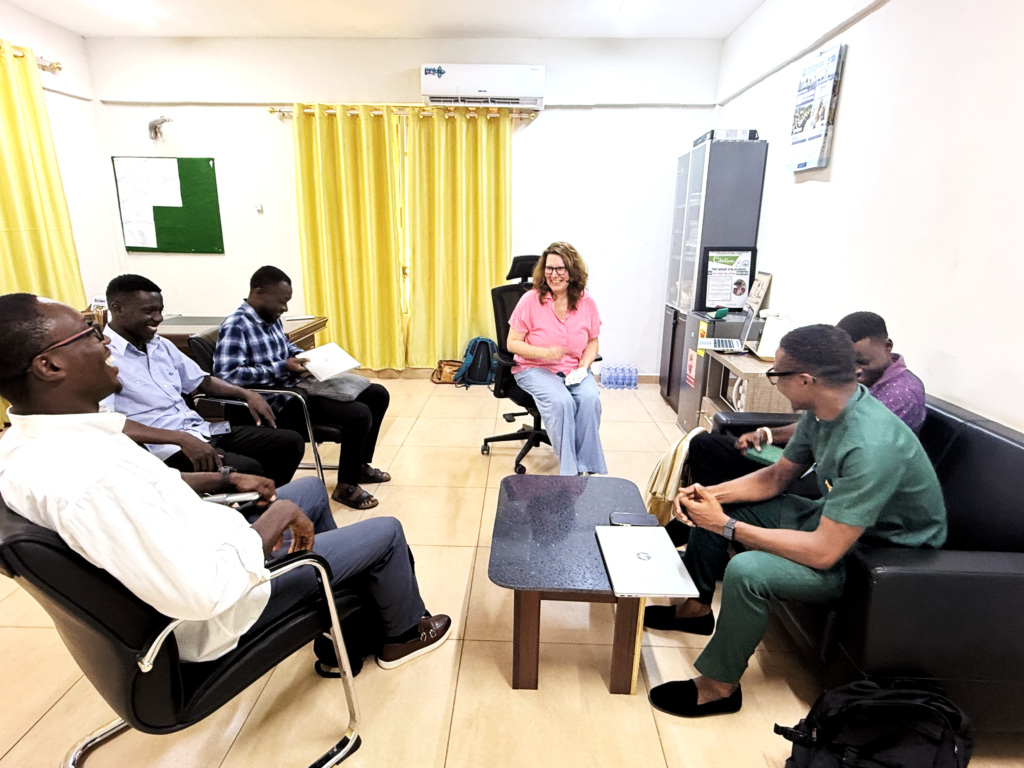
The session opened with an interactive segment in which participants introduced themselves and shared their academic backgrounds and motivations for joining the programme. Providing a historical account of the partnership, Professor Millicent Awialie Akaateba, Director of International Collaborations, traced its origins to initial engagements in 2021, which evolved into a formal collaboration by 2023. While the partnership initially aimed to host Research Master’s students from UvA for fieldwork, it has since expanded to include participation in the Erasmus+ K171 International Credit Mobility Program, enabling reciprocal staff and student exchanges between UBIDS and UvA.Visiting Scholars from the University of Amsterdam emphasised the importance of collaboration.
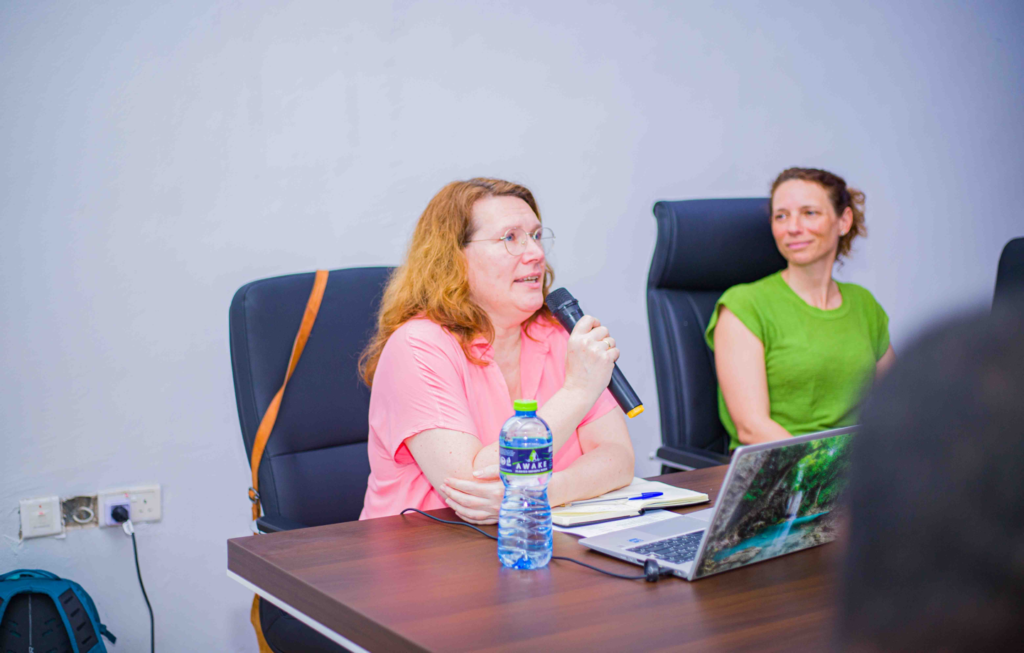
Dr. Courtney Vegelin highlighted the need for diverse perspectives and collaborative knowledge in development. She explained the Reimagining International Development Studies course as a hybrid class comprising UBIDS and UvA master’s students, designed to challenge conventional thinking about development studies’ traditional teaching methods and to include voices from organisations addressing inequality and decolonisation. She identified collaboration and co-creation as central principles underpinning the programme. She explained that collaboration requires participants to define engagement processes, including sharing ideas and making decisions, whereas co-creation focuses on generating new knowledge through interaction rather than refining existing ideas. She emphasised that meaningful collaboration demands openness and willingness to engage.
The physical mobility in Amsterdam is structured as a two-week intensive programme scheduled for June 2026. Activities will commence immediately upon arrival and include collaborative sessions, independent group work, and a final forum to present outcomes. UBIDS staff participants will also facilitate teaching sessions and present their research at the Governance and Inclusive Development Research Group at UvA. Participants were further introduced to a series of online preparatory engagements designed to support collaboration prior to the exchange. As part of the orientation, participants undertook a guided reflective exercise focusing on their learning objectives, approaches to collaboration, and anticipated contributions to knowledge creation. The exercise formed an introduction to the “task cycle” framework, which will be formally applied during the exchange.
 |
 |
An alumna and 2025 Erasmus+ mobility exchange ambassador shared reflections on her experience, noting that while adapting to a new academic and cultural environment in Amsterdam posed initial challenges, it significantly contributed to her personal and professional development. She highlighted opportunities such as presenting research, engaging with international peers, and participating in cultural activities.