

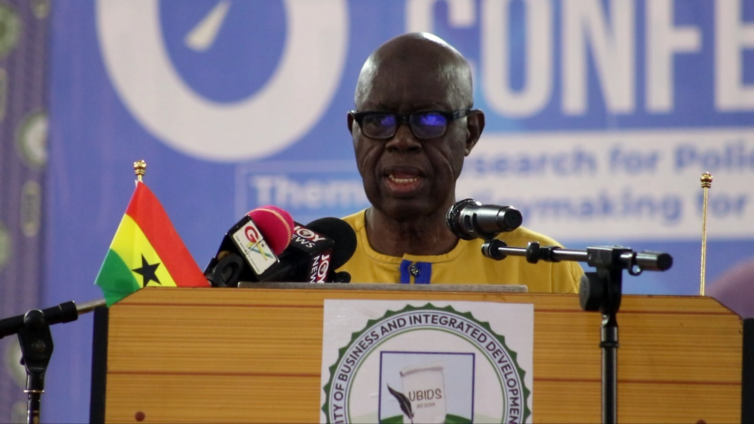
An Associate Professor in the Department of Food Security and Climate Change at the University for Development Studies (UDS), Prof. Saa Dittoh, has issued a strong challenge to Ghanaian academics and policymakers to end the cycle of shelf-bound, donor-driven studies and prioritize research that translates directly into actionable national transformation.
Delivering the keynote address at the 6th Annual Research and Development Conference of the University of Business and Integrated Development Studies (UBIDS) in Wa, Prof. Dittoh cautioned that without deliberate state funding and locally anchored research agendas, institutions risk generating “mal-development” that harms rather than improves the lives of citizens. The three-day conference was held under the theme: “Research for Policy: Strengthening Evidence-Informed Policymaking for Ghana’s Development.”
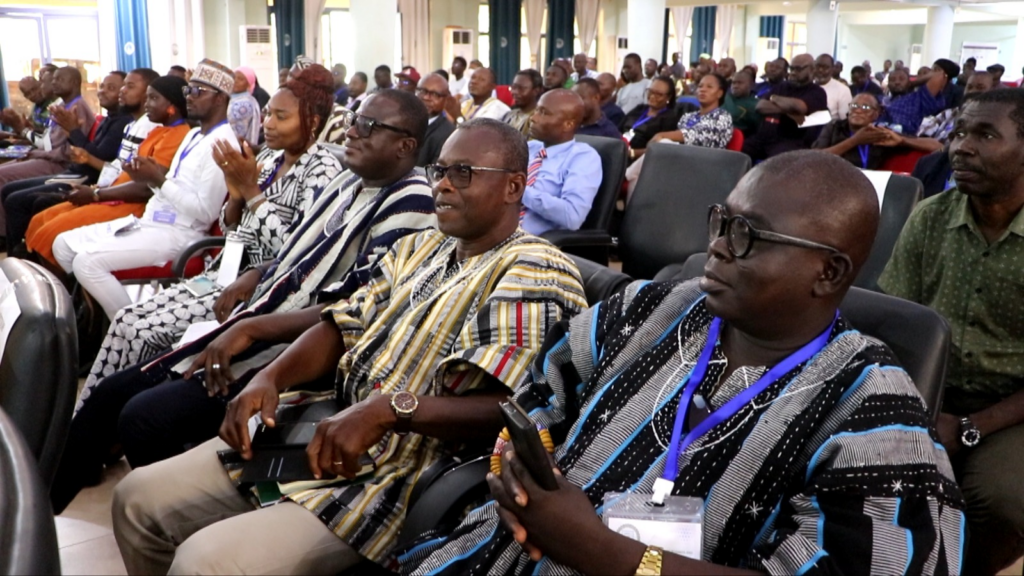 Prof. Dittoh lamented that despite decades of academic work and extensive development interventions across northern Ghana, tangible socioeconomic gains remain minimal because policy initiatives are frequently shaped by foreign donor priorities rather than homegrown community needs. “Our institutions, like the Ministry of Food and Agriculture, will not sit down and develop their own projects and programmes; they wait for somebody else to come and do it,” Prof. Dittoh stated.
“Donors look at your plan, take what fits their agenda, like promoting single-crop maize or soybean, and fund it. But your plan also included millet, groundnuts, and beans. They fund their own interests because they must account to their taxpayers back home, leaving our own priorities behind.”
He also warned researchers against offering single-crop agricultural recommendations that fail to reflect the reality of mixed-cropping systems practiced by smallholder farmers, as well as the indiscriminate reliance on artificial intelligence tools that lack context-specific local data.
“If research recommendations do not answer the ‘how’ and ‘why’ for the practitioner on the ground, they are useless,” he remarked, urging universities to institutionalize problem-identification workshops before embarking on studies.
Opening the conference on behalf of Upper West Regional Minister Charles Lwanga Puozuing, the Chief Director of the Upper West Regional Coordinating Council (UWRCC), Shaiku Mumuni Damma, affirmed that national transformation cannot be achieved through good intentions alone.
“A nation cannot sustainably develop on the strength of good intentions alone. It must develop on the strength of good evidence, sound institutions, and courageous decisions,” Damma stated, invoking the words of statistician W. Edwards Deming: “Without data, you’re just another person with an opinion.”
Damma called on both researchers and policymakers to bridge the systemic gap between laboratory discoveries and government desks. He urged scholars to focus on socially consequential inquiries that confront pressing challenges such as youth unemployment, illegal mining, climate change, and primary healthcare delivery.
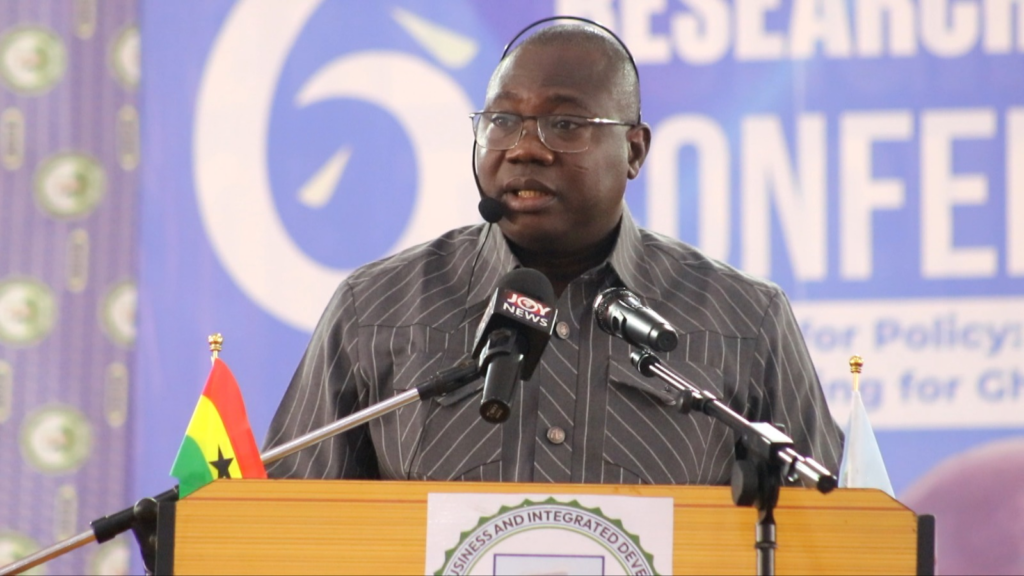 The Vice-Chancellor of UBIDS and Chairman of the conference, Prof. Emmanuel Kanchebe Derbile, revealed that the university is aggressively positioning itself to bridge the research-funding deficit by establishing a dedicated Grants Office.
“Plans are far advanced for building institutional capacity and establishing a robust grants management system for sourcing, winning, and managing competitive research and development grants,” Prof. Derbile announced.
“The Grants Office will serve as a special-purpose vehicle to help faculty and researchers with proposal development, compliance, and partnership building.”
Prof. Derbile expressed satisfaction with the growing research interest among younger scholars, noting that postgraduate students accounted for roughly 60% of the 125 registered participants at the conference.
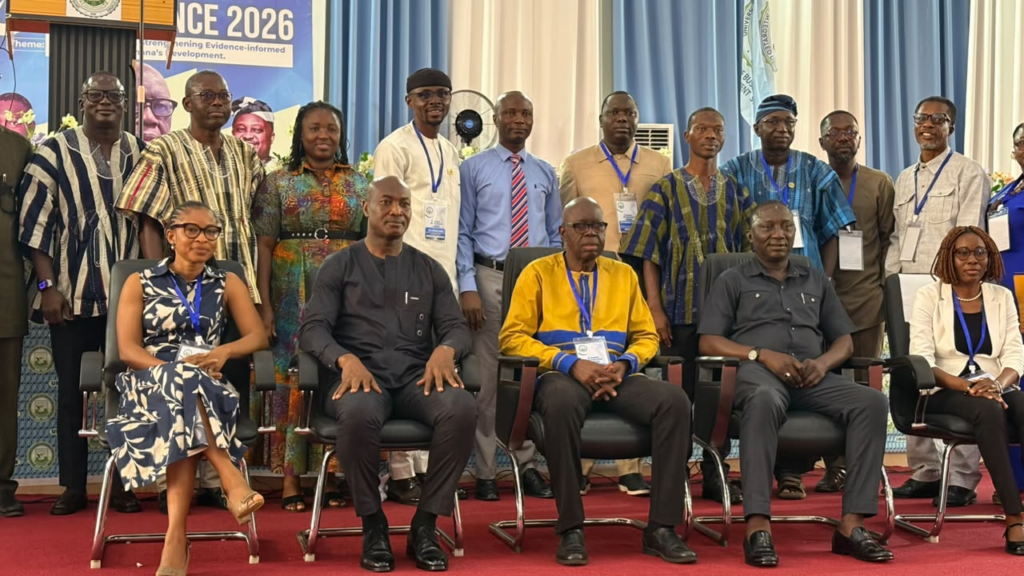 The Director of the Directorate of Research at UBIDS, Prof. Frederick Dayour, reported significant growth in the event’s reach, attracting 165 abstract submissions from universities, health facilities, and district assemblies across Ghana and abroad.
To ensure that academic research reaches government desks, Prof. Dayour highlighted the introduction of policy briefs as part of this year’s proceedings. Of the 32 briefs submitted, 22 were selected for publication across key sectors, including digital finance, public procurement, tourism, and spatial planning, and will be distributed directly to sector ministries and civil society organizations.
Source: https://www.myjoyonline.com/stop-producing-research-that-ends-up-on-shelves-prof-dittoh-challenges-ghanaian-academics/