

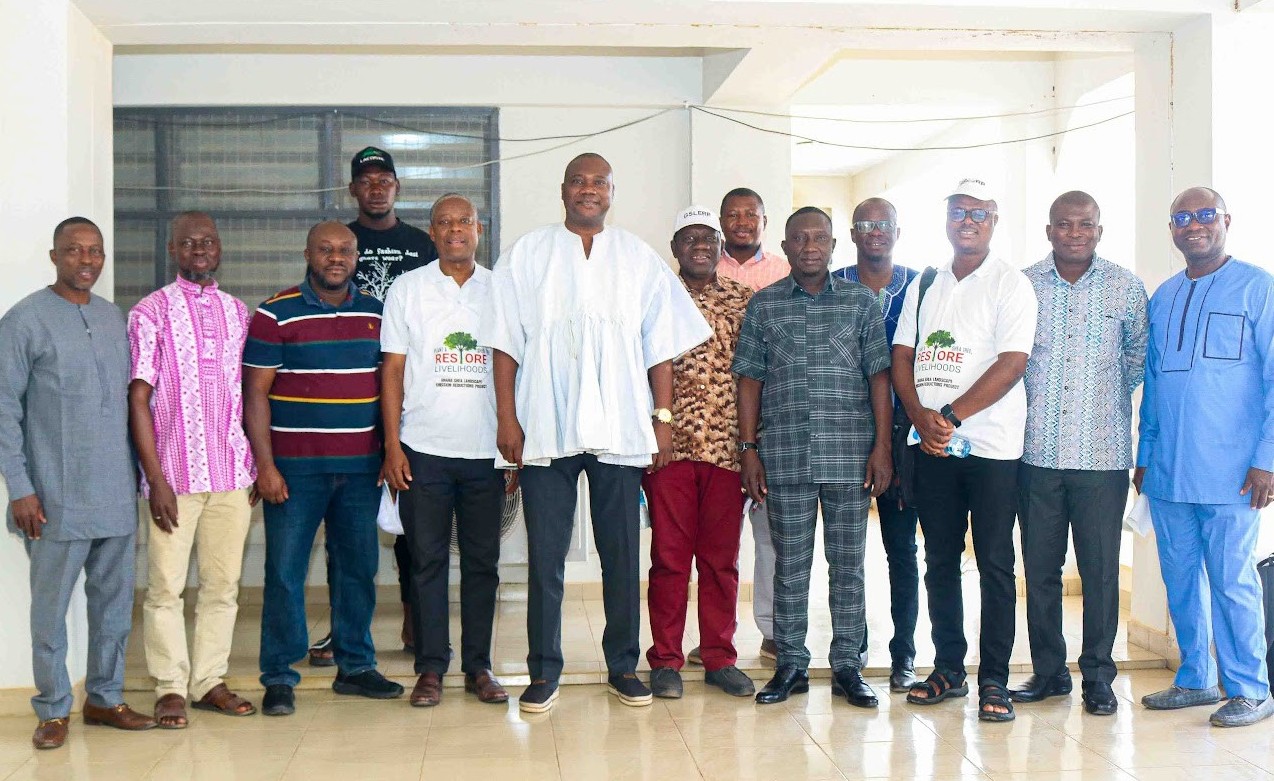
The National Director of the Climate Change Unit at the Forestry Commission, Dr. Joseph Appiah-Gyapong, paid a courtesy call on Professor Emmanuel Kanchebe Derbile, Vice-Chancellor of the University of Business and Integrated Development Studies (UBIDS), at the Office of the Vice-Chancellor.
The visit, which took place on Thursday, January 16, 2026, aimed to strengthen collaborations between the University and key national and international partners implementing climate change mitigation and environmental sustainability interventions within the University and its surrounding communities. With the Vice-Chancellor to receive the delegation were: the Pro Vice-Chancellor, Professor Issaka Kanton Osumanu; Registrar, Mr. Job Asante; the Director of Finance, Dr. Mohammed Ngmenipuo Iddrisu; the Director of Internal Audit, Mr. Desmond Y. Ziniyel; Director of Works and Municipal Services, Ing. Reginald Ankrah-Assibey; and the Project Manager, Surv. Ajongba Desmond Malachi.
Dr. Appiah-Gyapong (Director, Climate Change Unit of the Forestry Commission) was accompanied by a delegation comprising Mr. Baapeng Emmanuel (Project Manager, GSLERP from the Climate Change Unit of the Forestry Commission), Mr. Aaron Adu (Managing Director of the Global Shea Alliance), Mr. Kuukaraa Cornelius (Component Manager of the Ghana Shea Landscape Emission Reductions Project of the Global Shea Alliance), Mr. Kwame Oteng Awuah (the Upper West Regional Manager of the Forestry Commission) and Mr. Sumaila Rafiu of the Forestry Commission in Wa.
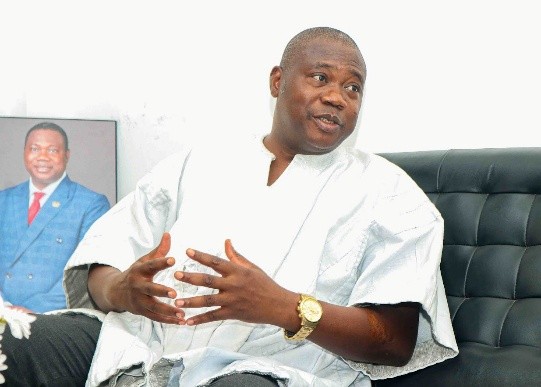 Welcoming the delegation, Professor Derbile expressed appreciation for the emerging partnership and reaffirmed the University’s commitment to environmental sustainability. He noted that designated areas within the University had already been earmarked for greening and landscape restoration, in line with UBIDS’ broader vision of promoting sustainable development through practical interventions.
The delegation was briefed on the progress of ongoing tree-planting initiatives in the University. It was reported that over 7,000 assorted tree seedlings had been successfully transplanted, with an encouraging survival rate. To support maintenance, 25 women from nearby communities have been engaged to water the seedlings regularly. However, challenges such as the absence of fencing to protect the young trees from cattle and other animals were highlighted. The need for a tricycle to facilitate movement, watering, and monitoring activities was also emphasised as critical to the success of the project.
Discussions further explored plans to establish a forest belt along the University’s boundaries, an initiative aimed at enhancing biodiversity, serving as a climate buffer, and delivering long-term environmental benefits. While acknowledging the University’s resource constraints, the Vice-Chancellor expressed optimism and called for the initiative to be extended beyond the University to positively impact surrounding communities through livelihood support and environmental protection. He therefore appealed for additional support to sustain and scale up the project.
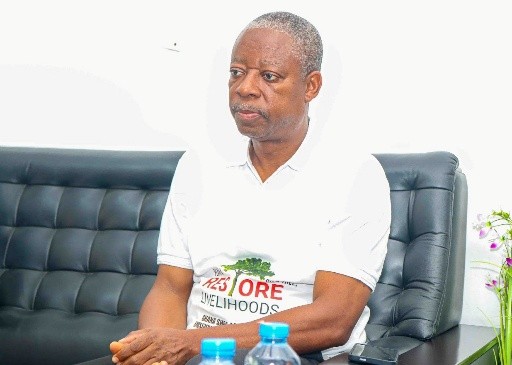
Dr. Appiah-Gyapong commended Professor Derbile and his team for embracing climate-smart interventions and described the University as a strategic institutional partner. He explained that the visit was also intended to enable the Climate Change Unit’s leadership to assess ongoing projects across different regions and deepen collaboration with implementing partners.
Mr. Kuukaraa, Manager of the Ghana Shea Landscape Emission Reductions Project of the Global Shea Alliance, disclosed that preparations were underway to commence the next phase of activities early in the year, with a substantial number of seedlings already raised and awaiting transportation. He also echoed concerns about livestock destruction of seedlings and underscored the importance of protective measures.
Adding his voice, the Upper West Regional Manager of the Forestry Services Division, Mr. Kwame Oteng Awuah, expressed satisfaction with the high survival rate of the transplanted trees. He recommended the creation of a heterogeneous plantation environment, subject to land availability, to enhance ecological resilience and long-term sustainability.
The visit reaffirmed UBIDS’ growing role as a hub for sustainability-focused partnerships and demonstrated the shared commitment of the University, the Forestry Commission, and the Global Shea Alliance to climate action, environmental stewardship, and community development.